.png)
Wilkin & Sons, the family-owned business behind Tiptree, has been crafting premium jams, marmalades and conserves on their Essex farm since 1885. With over 140 years of heritage, Tiptree is now modernising its marketing with elm BrandHealth.
We sat down with Head of Marketing James Procter-Blain to find out how.
"The real strength of elm BrandHealth is that I've been able to put hard data behind what is effectively gut instinct."
James: "Two things came together at once. I'd done the Mark Ritson Mini MBA over the summer, and he is at pains in his very first module to stress the importance of brand health tracking. Everything relates back to awareness, consideration, purchase and so on.
The other thing was that I'd already used elm BrandHealth at my previous role and was impressed with the service. So as soon as I arrived at Tiptree, it was one of the first things I set up."
James: "I'd done tracking on an ad hoc basis, pre and post-campaign bursts rather than continuous measurement. With traditional providers that's expensive, gives you a pretty limited picture, and the data comes back via decks rather than something you can explore yourself.
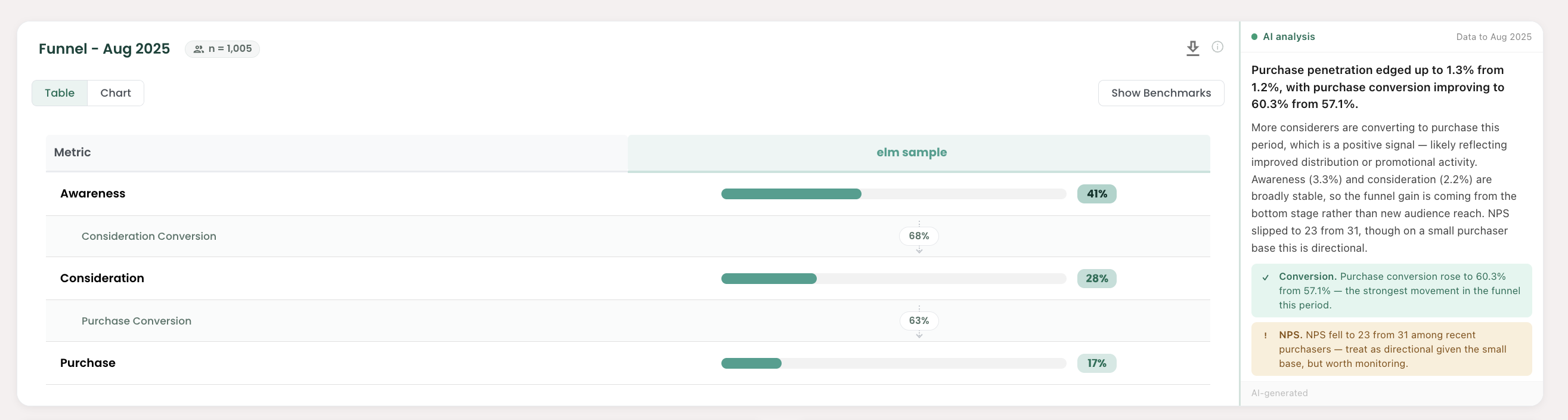
With elm, costs are reasonable compared to other providers and the interval is always consistent, so you build up a much better picture over time. The monthly dips give you your core funnel measures. The quarterly dips add image statements and competitor tracking, things that don't change often enough to ask every month. I'm a technophobe, but once I got my head around the dashboard, it's completely straightforward, even for me!"
James: "Brand health is the universal language of marketing. It helps you avoid the traps around ROI - 'is this going to drive sales, why are we doing this?' Everything I do as Head of Marketing should, in theory, move one of those core measures. If it doesn't, I probably shouldn't be doing it.
It gives me a language I can use with agencies, my team and the board. Just this morning I presented two media plans from two different agencies to the board. One board member said, 'Clearly the plan you're recommending does a better job of driving awareness, and that's what we need to be doing.' They were playing back the language I'd been using with them for months."
James: "We came in with 44% prompted awareness. For a brand that's been going 140 years, that should be higher. When I told people I'd taken this job at Tiptree, some of them said 'who?' So I had the gut instinct, but now I had the number to back it up.
The data also showed that our customer skews 50-plus, which is a 'modernise or die' moment for the business. And we're very strong in the East of England, almost a regional brand. If we want to grow nationally, we need national advertising."
James: "The strategy for this year is single-minded: drive awareness. The elm data gave me the evidence to walk into the board and say, here are the figures, awareness is too low, here is the plan to fix it. We're investing in TV advertising, the biggest marketing spend this business has made in around 30 years.
Without the data, someone on the board could quite easily have said, 'Everyone knows Tiptree, we've been going 140 years, why do we need to advertise?' Now I've got the proof to say, actually, they don't."
James: "We can filter BrandHealth by which supermarkets people shop in, so we can look at Waitrose shoppers specifically and see how they perceive the brand versus shoppers elsewhere. You just wouldn't get that from a traditional omnibus study.
I also used the custom question to ask about Britishness, because that's a key part of our offer that competitors don't have. That went straight into our latest retail presentation. The argument to the buyer is: here's what premium shoppers are looking for, here's the evidence they associate those values with Tiptree, and here's why you need us on your shelf.
The competitor tracking shows we're third highest for awareness in jams and spreads, ahead of a whole raft of smaller brands. So I can say to a buyer: why back one of these smaller players when Tiptree already has the third highest awareness in the category, and we haven't spent a penny on advertising in years?"
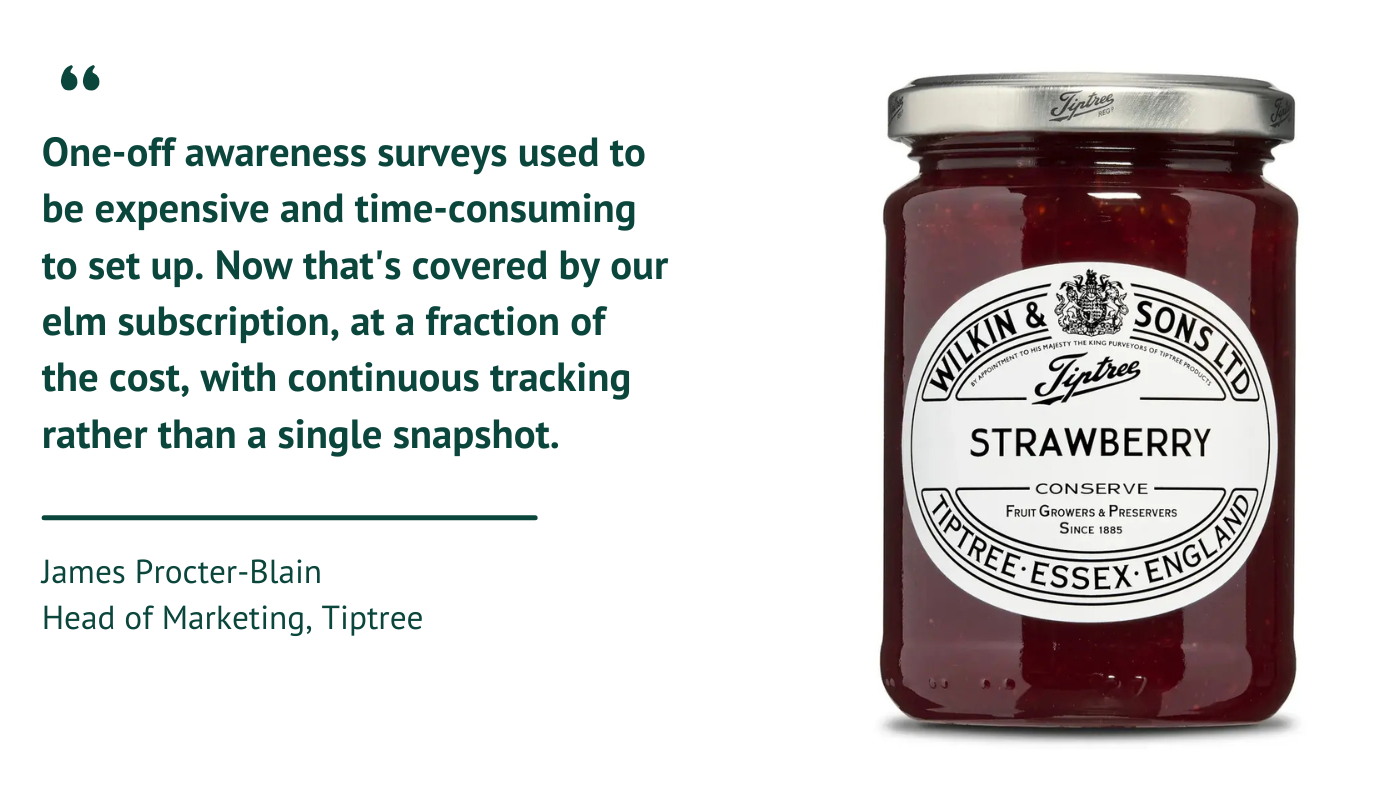
James: "It's made sure we double down on the right decisions and don't waste budget going down the wrong path. It's also saved us on research costs. One-off awareness surveys used to be expensive and time-consuming to set up. Now that's covered by our elm subscription, at a fraction of the cost, with continuous tracking rather than a single snapshot."
"I can now demonstrate to the board that TV advertising is the right thing to do."
Want to know where your brand's awareness really sits? Email hello@getelm.co or sign up now.

.png)